When a Singapore couple returned from years in New York with an affinity for the American brownstone, they didn’t simply want to replicate its aesthetic — they wanted to understand why it works, and make it work here.
Genome Architects approached the brief with rigour. Digital wind simulations mapped airflow across multiple scenarios — doors open, half-open, closed — informing the precise placement of custom aluminium monsoon windows, a jack roof for passive heat expulsion, and a staircase deliberately positioned as a wind corridor. The result is a home that self-ventilates.
The facade is equally considered. Oatmeal-coloured brick, double-layered and waterproofed, was chosen for its material performance — outlasting plaster, treated to resist moss, expressing the thermal mass and authenticity that tropical climates demand. Vertical windows, set deep into terracotta-coloured slim sills, challenge the trend and wisdom that tropical homes require expansive glass openings. Privacy, proportion and solar control were designed from the start. The owners’ personality does the rest: bold colour, collected art, and a fearless interior sensibility that proves evidence-based design and beautiful living are not in tension.
This is what it looks like when a client and architect speak the same language.
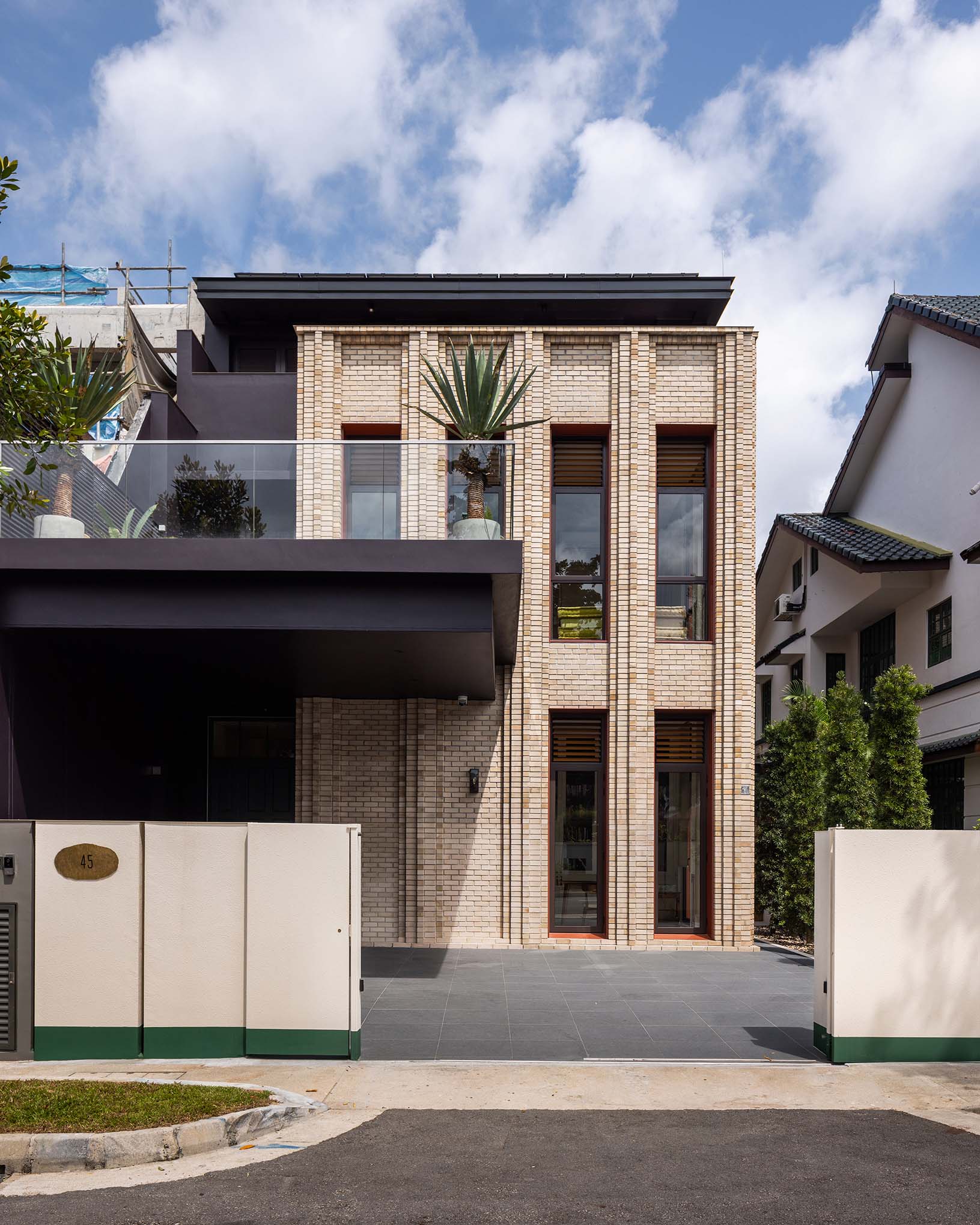
Street facade: the verticality and tactility of the solid brick elevation asserts itself. Brick expression and construction detail gives a narrow plot the presence of a townhouse wider than its true width.
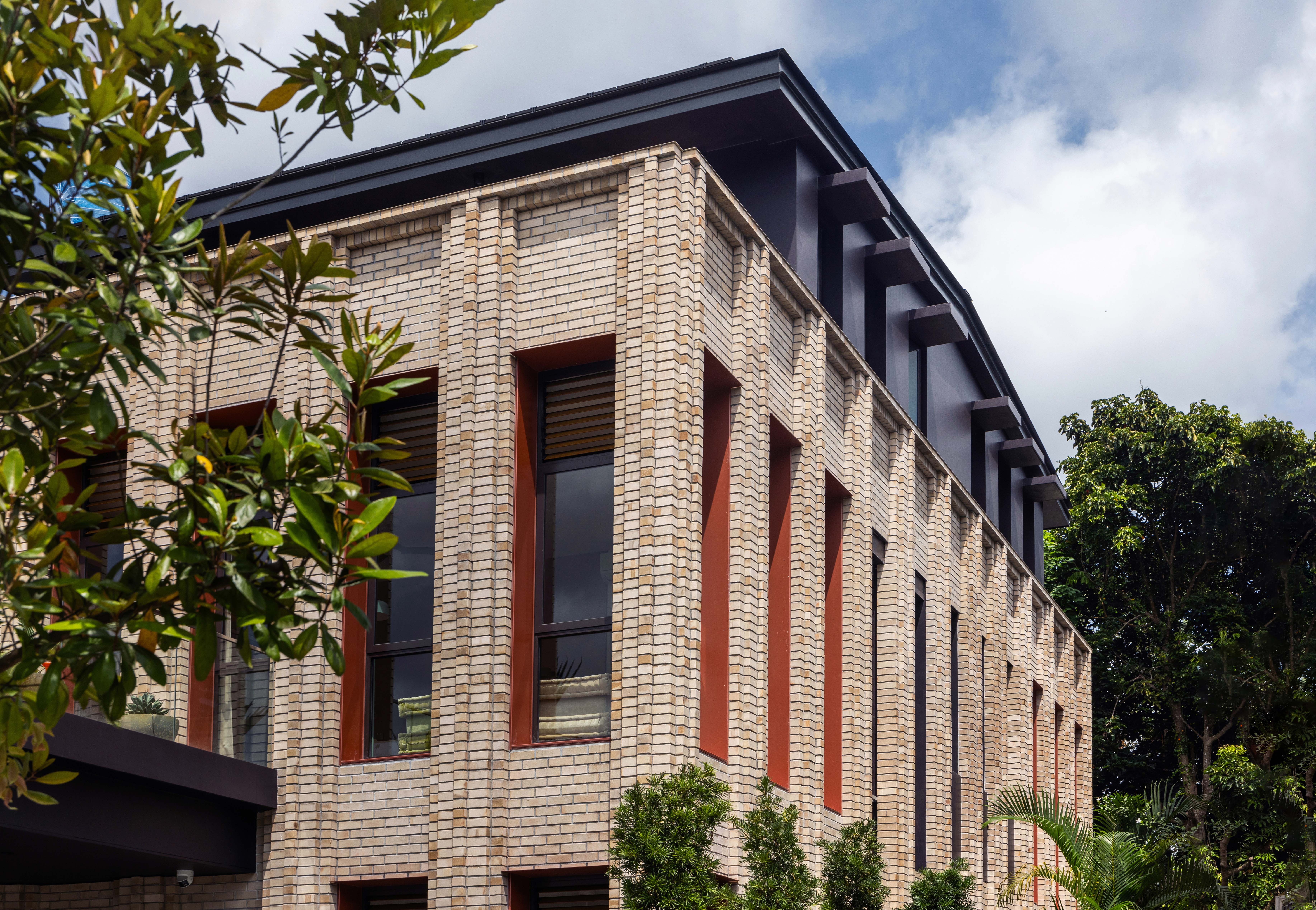
At oblique angle, the facade reveals its true depth and expression as a volume. Brick pilasters and cornices create a rhythm of shadow that makes the elevation legible at different scales.
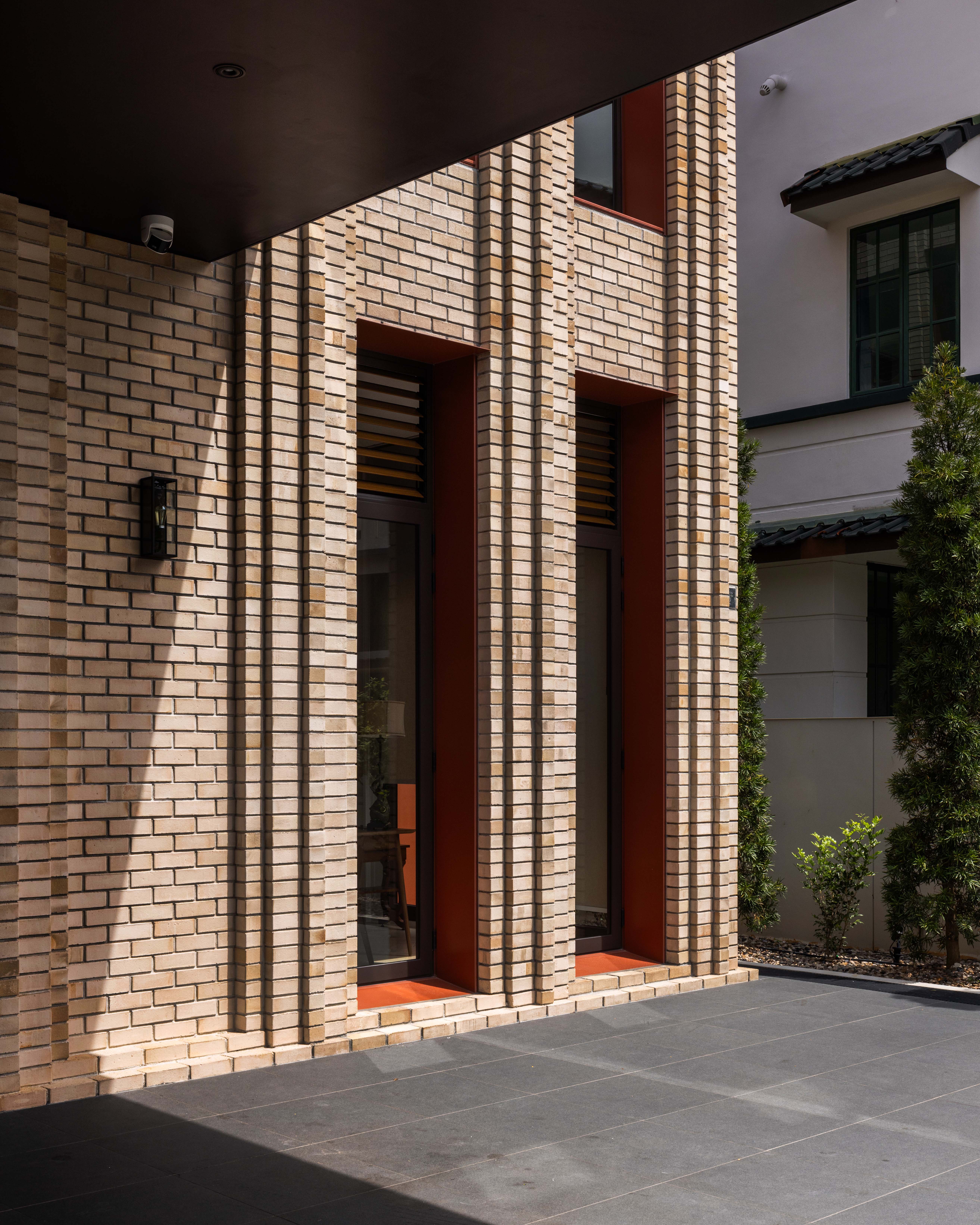
Facade close-up from the car porch at ground level, shows deep but slim profiled terracotta-coloured aluminium sills revealing the thick, insulated integrity of the walls. The facade performs at every hour.
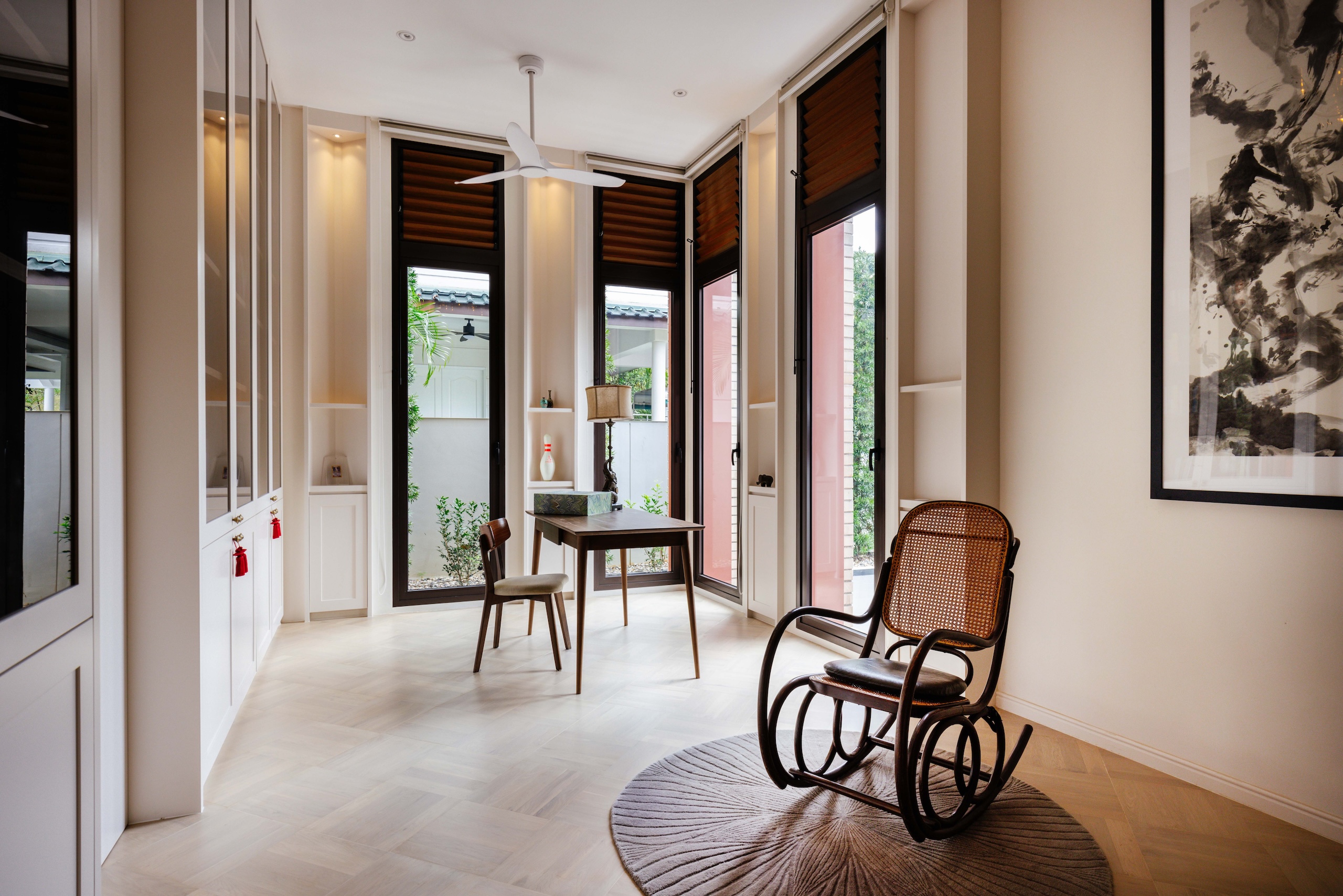
The front study shows the indent of the brick walls on the exteriorly mirrored and expressed internally as display shelves. Corner windows on two elevations flood the room with natural light. The monsoon louvres overhead allow ventilation without having to choose between that, security and light.
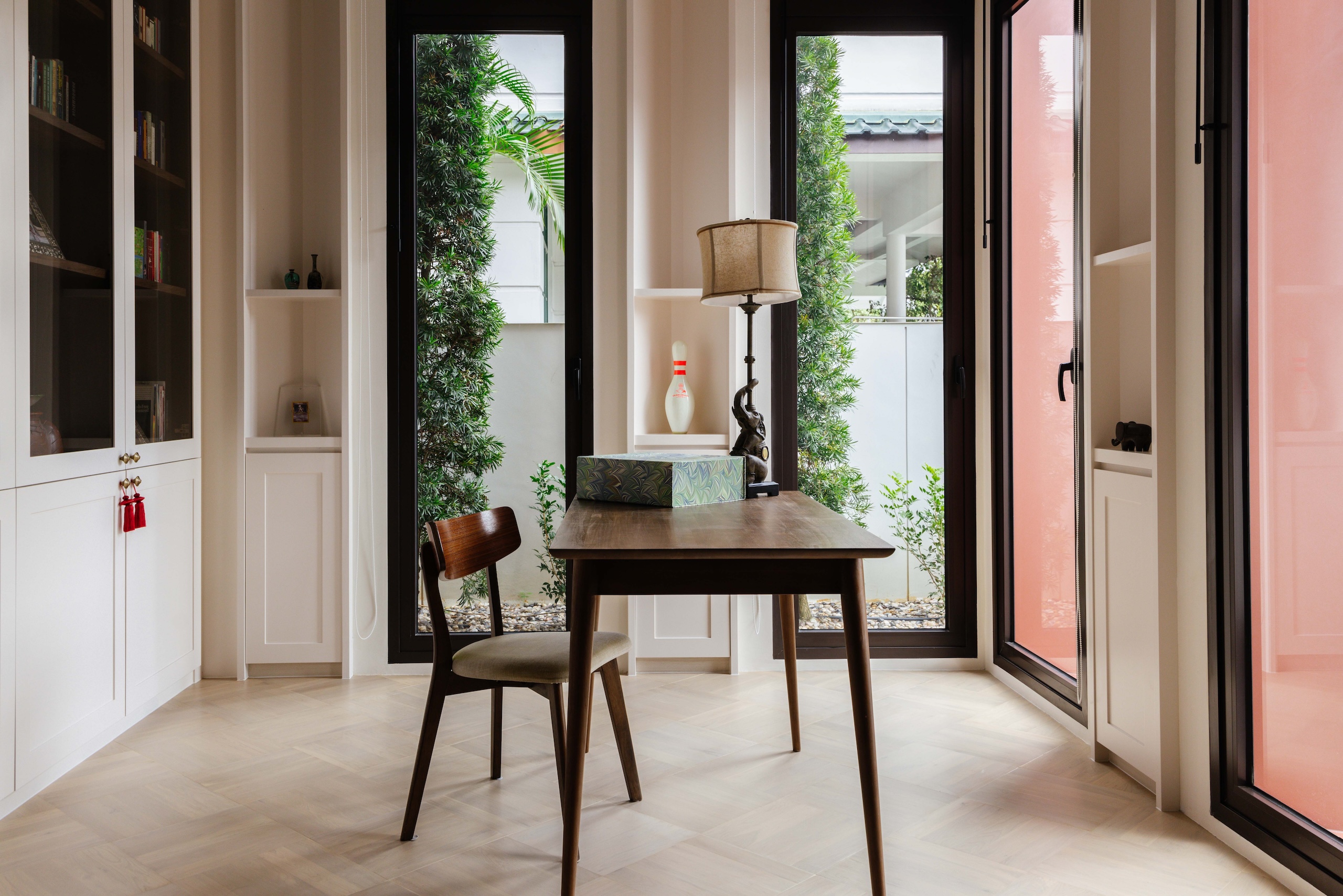
Greenery replaces masonry on three sides of the study dissolving the boundary between room and landscape outside, framed vertical views by custom displays.
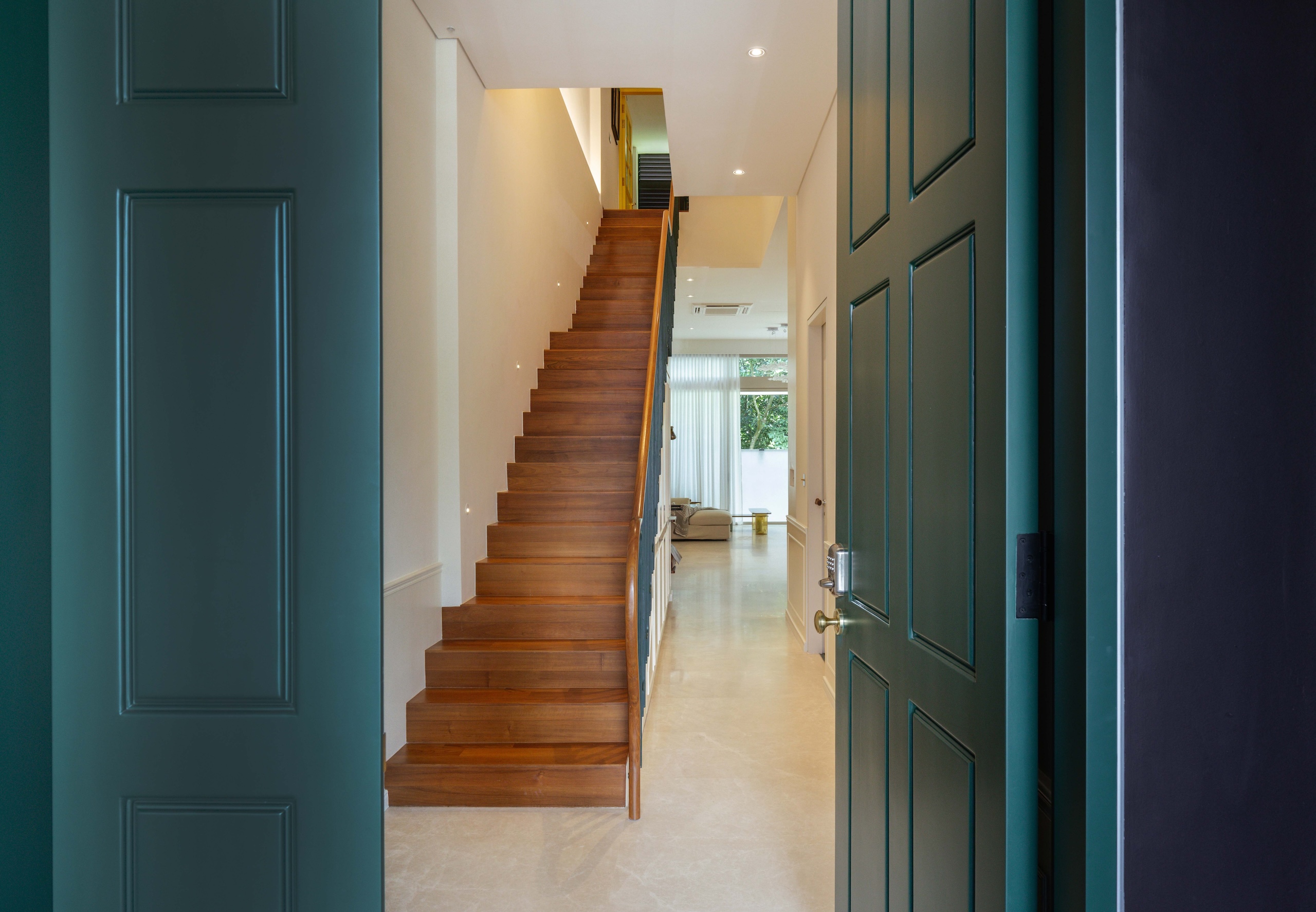
The entry hall and staircase sequence is deliberate: a compressed threshold opens to a warm timber stair, with borrowed light from the living space drawing the eye through the full depth of the house beyond.
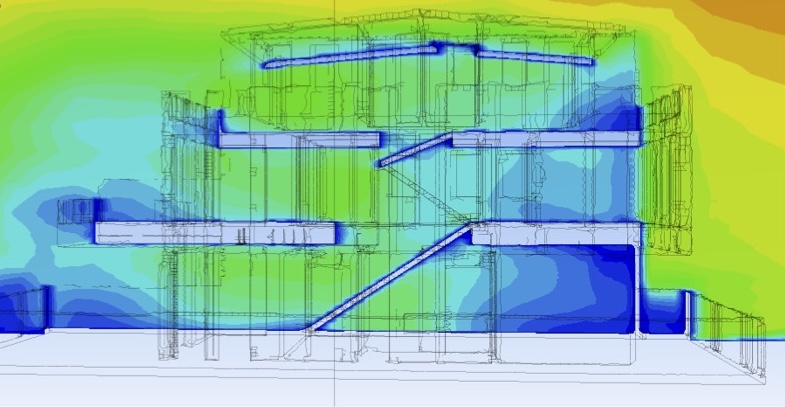
Wind simulation section through the staircase. CFD analysis confirmed its role as the primary wind corridor, channelling air from ground to roof across all floors.
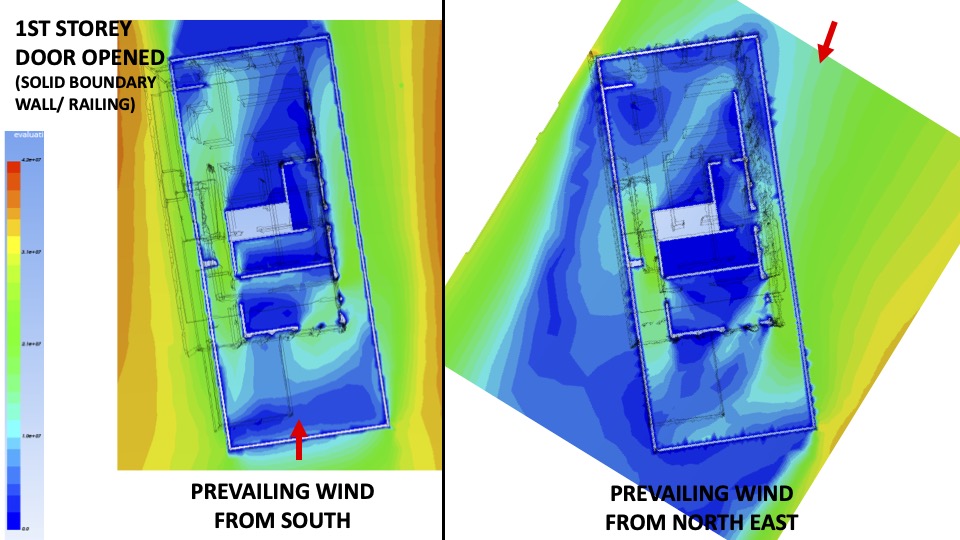
Evidence before aesthetics. Airflow simulation modelled across prevailing wind directions informed window position and louver placement across the three floors.
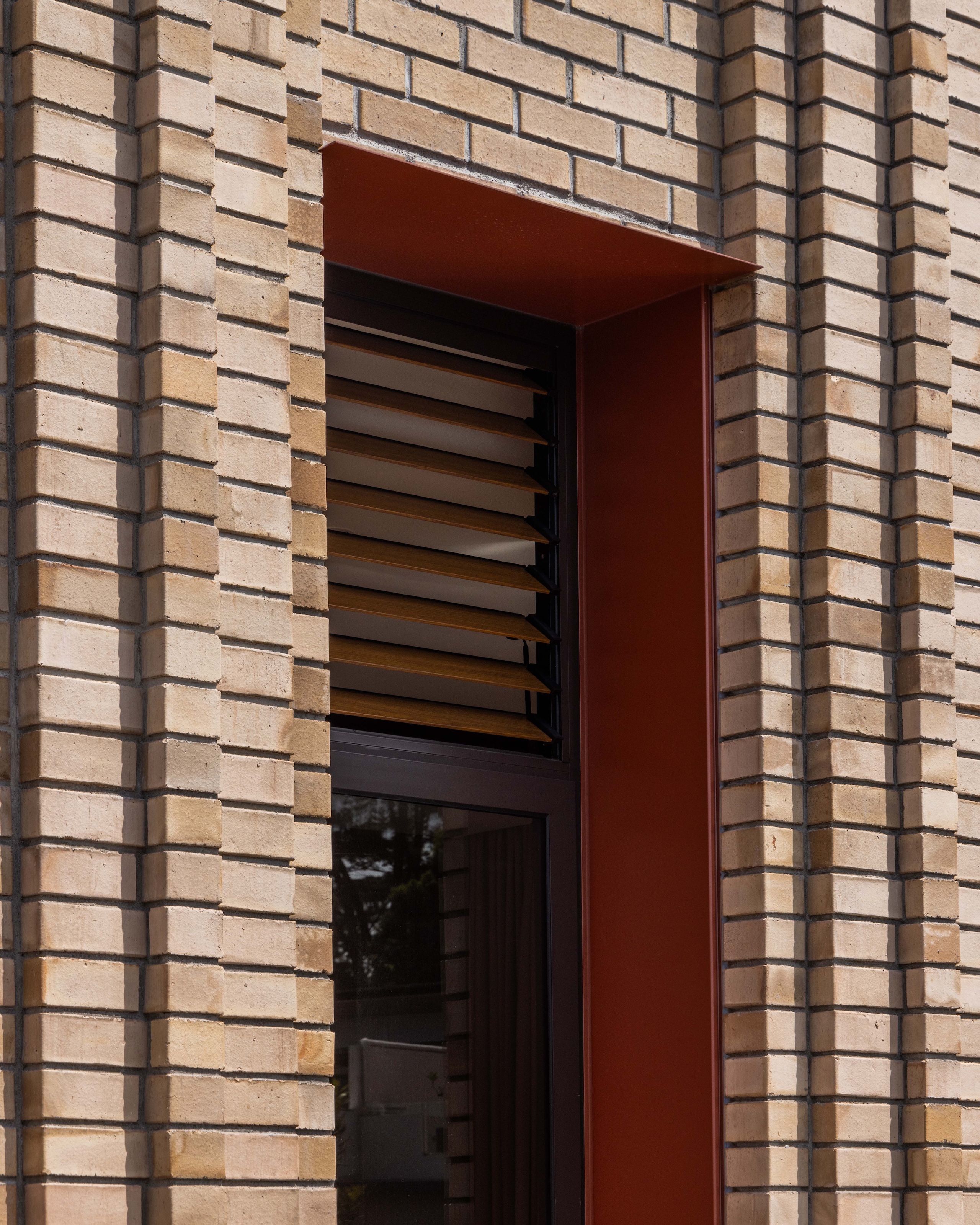
Deep but slim profiled terracotta-coloured aluminium sills complement the brick walls so that the expression is a modern and precise one.
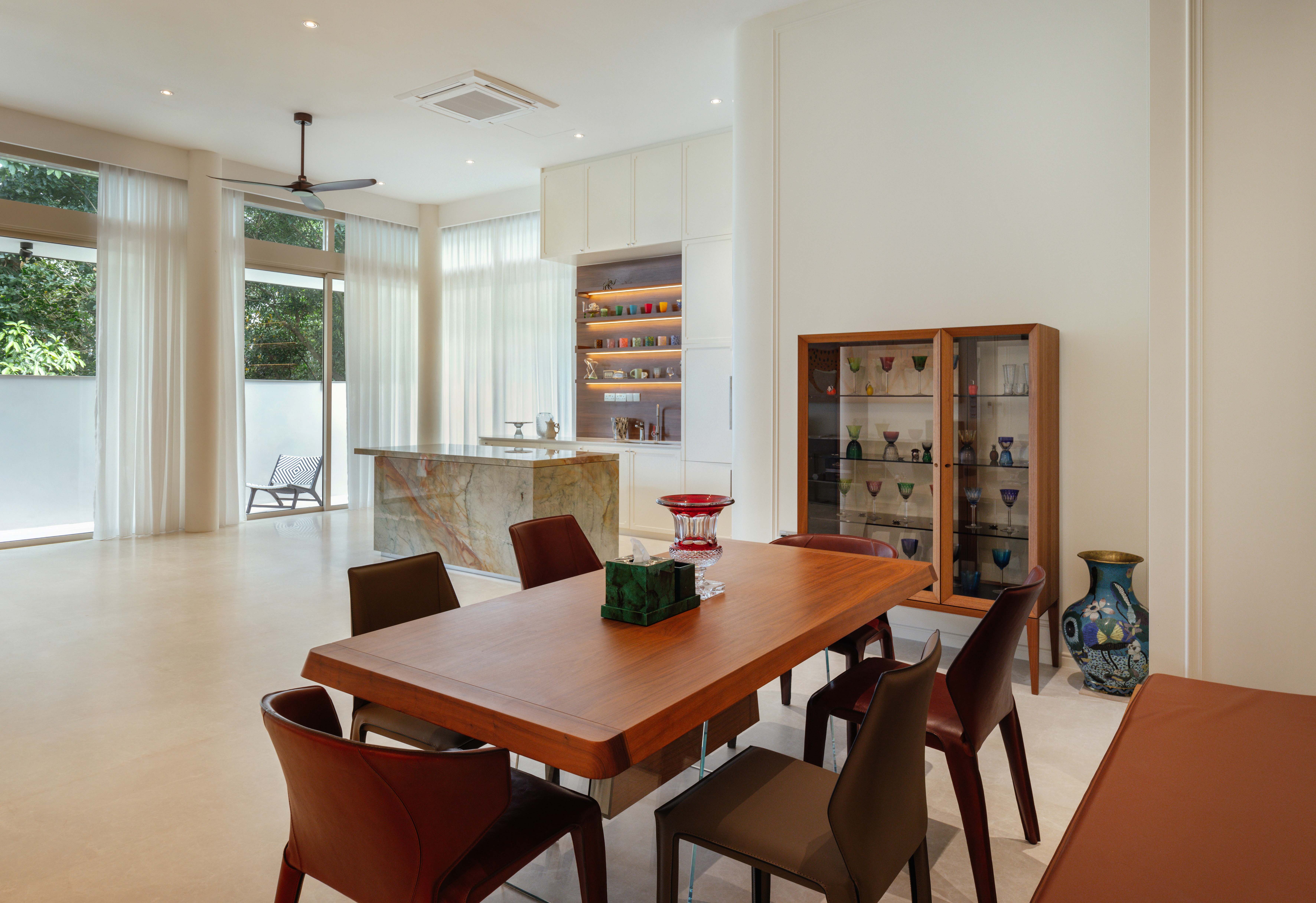
Dining room and kitchen island: Light enters from the rear garden, softened by sheer curtains and celebrating the natural reserve beyond. The colourful quartzite island holds the centre without closing the space.
A dramatic quartzite island gives way to a wall of lit timber shelf displays. The refrigerator disappears behind floor-to-ceiling cabinetry, leaving only what was meant to be seen: swirling stone, warm wood, and a curated collection. lit like a gallery.
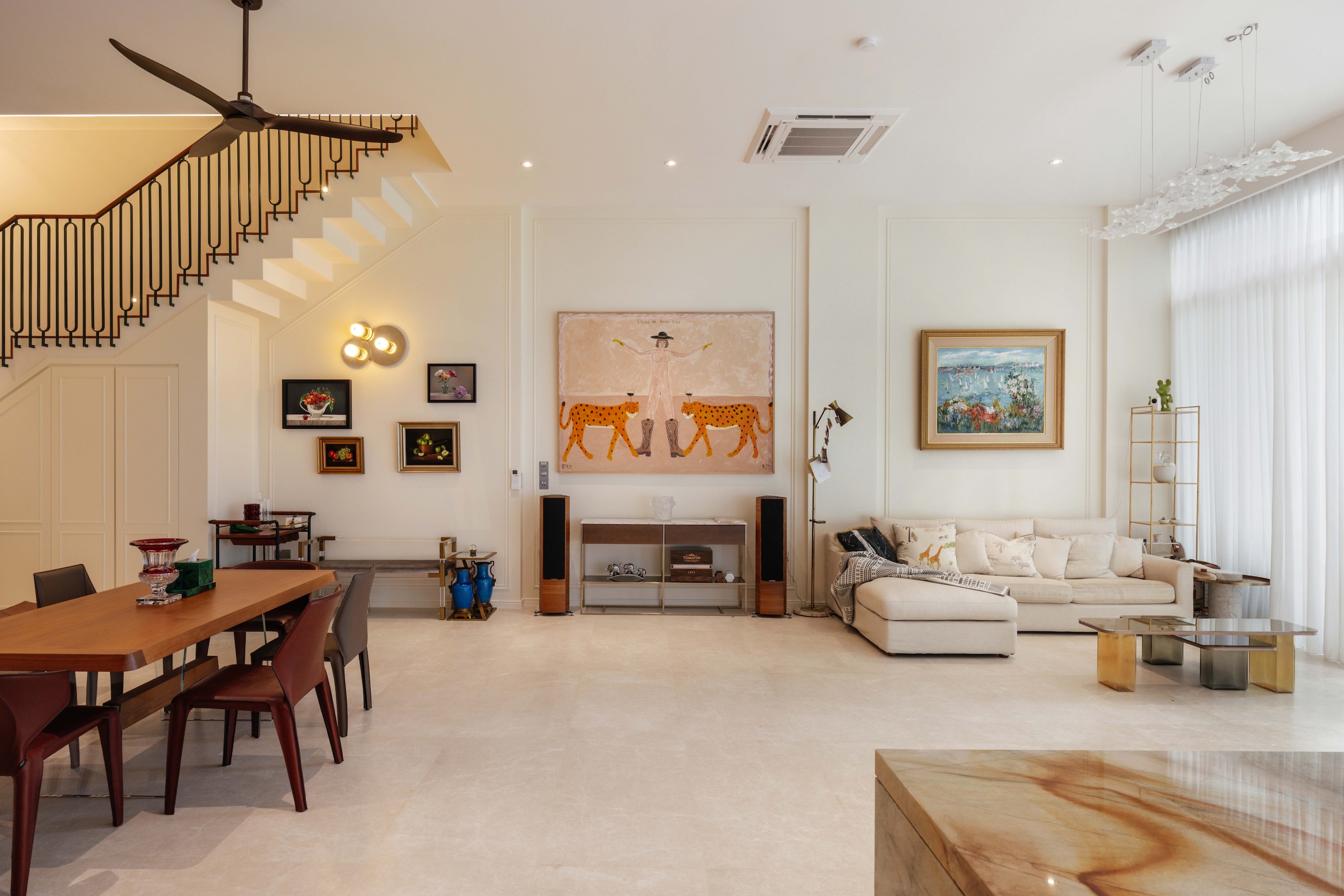
Living and dining, ground floor: A 4-metre volume that earns its height. Wainscoting grounds the room; the staircase animates its corner; art occupies the wall with the confidence the architecture invites.
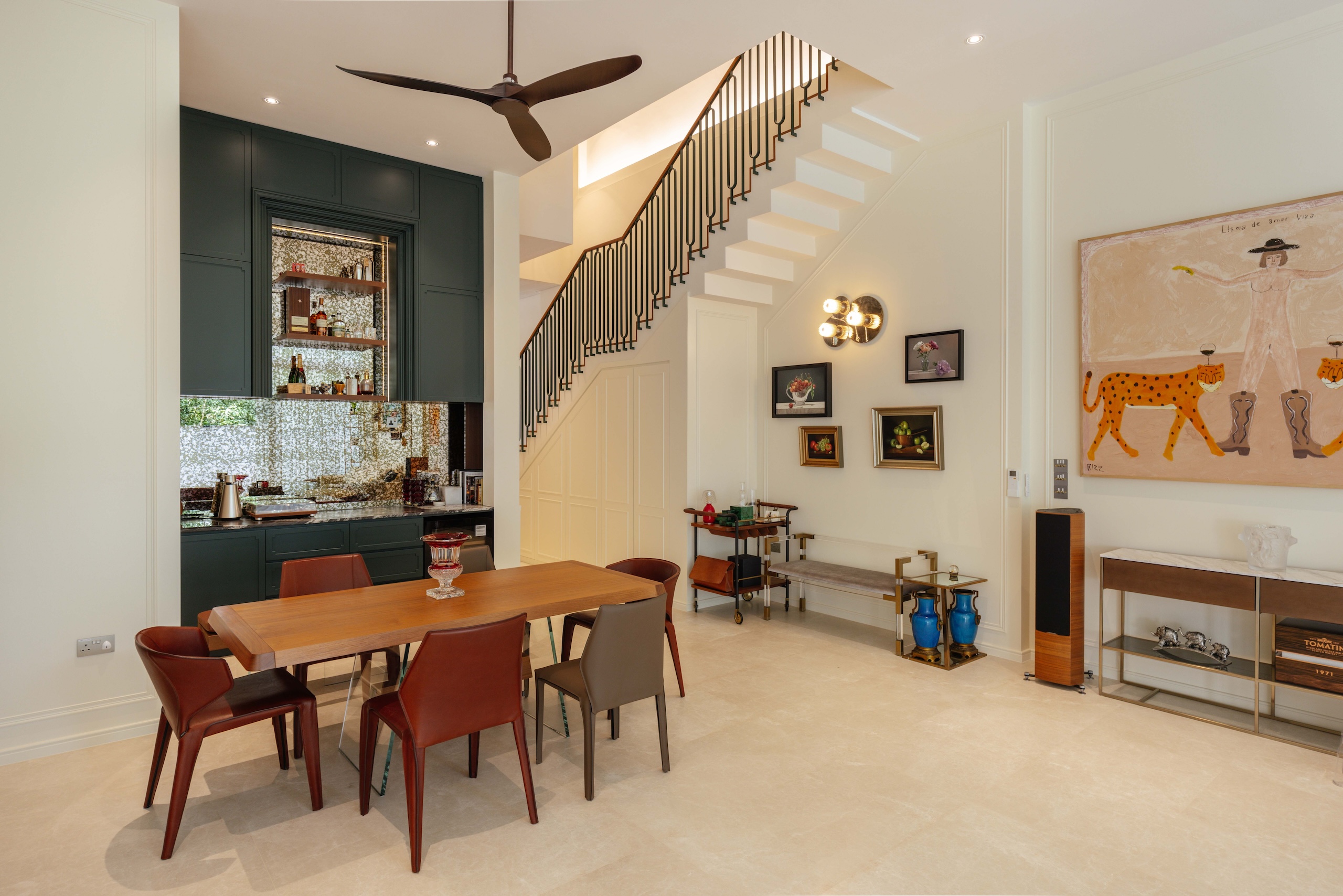
Dining room with bar and staircase Three programmes — dining, bar, circulation — occupy one volume without crowding it. The staircase rises at the room's edge, freeing the floor plate entirely.
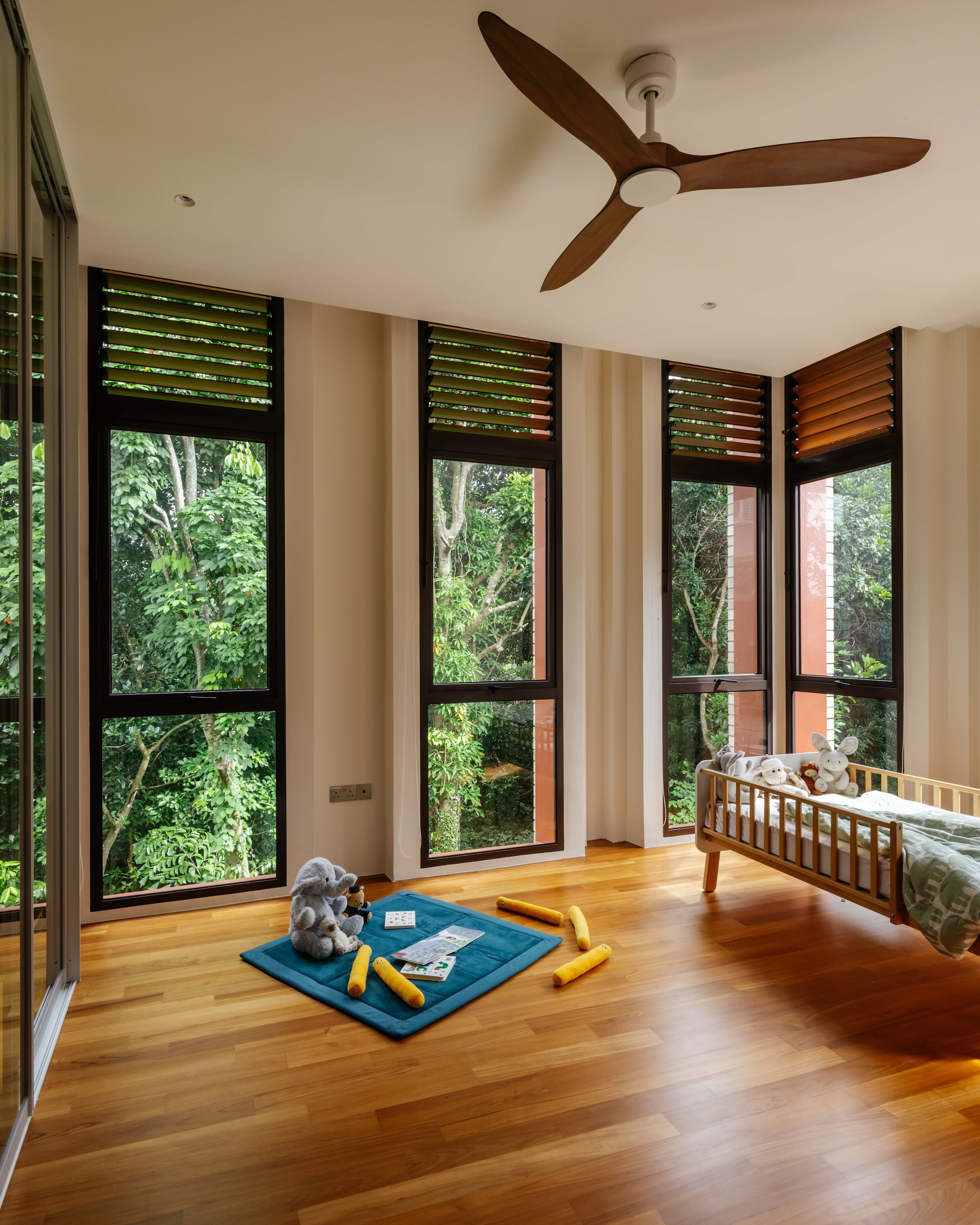
Children's bedroom The vertical window proportion, consistent throughout the house, here frames a canopy of mature trees. The outlook is not incidental — it was designed for.
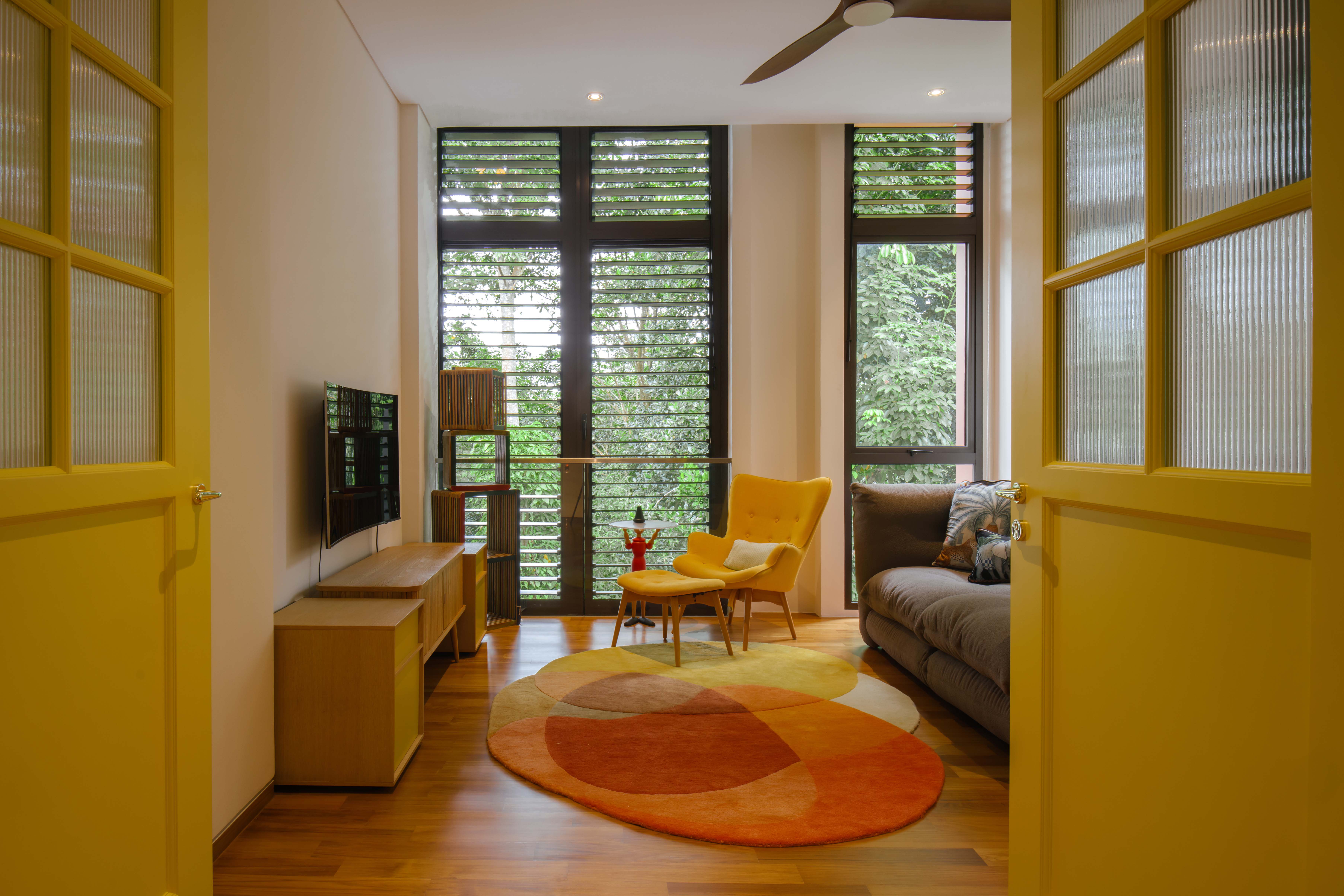
Family room, second floor Colour is deployed with structural intent. The yellow door frames the threshold; the louvred windows beyond dissolve the wall into filtered green light.
Master bedroom Louvred monsoon windows stratify light and air simultaneously. The room is never sealed from the outside — it breathes on its own terms.
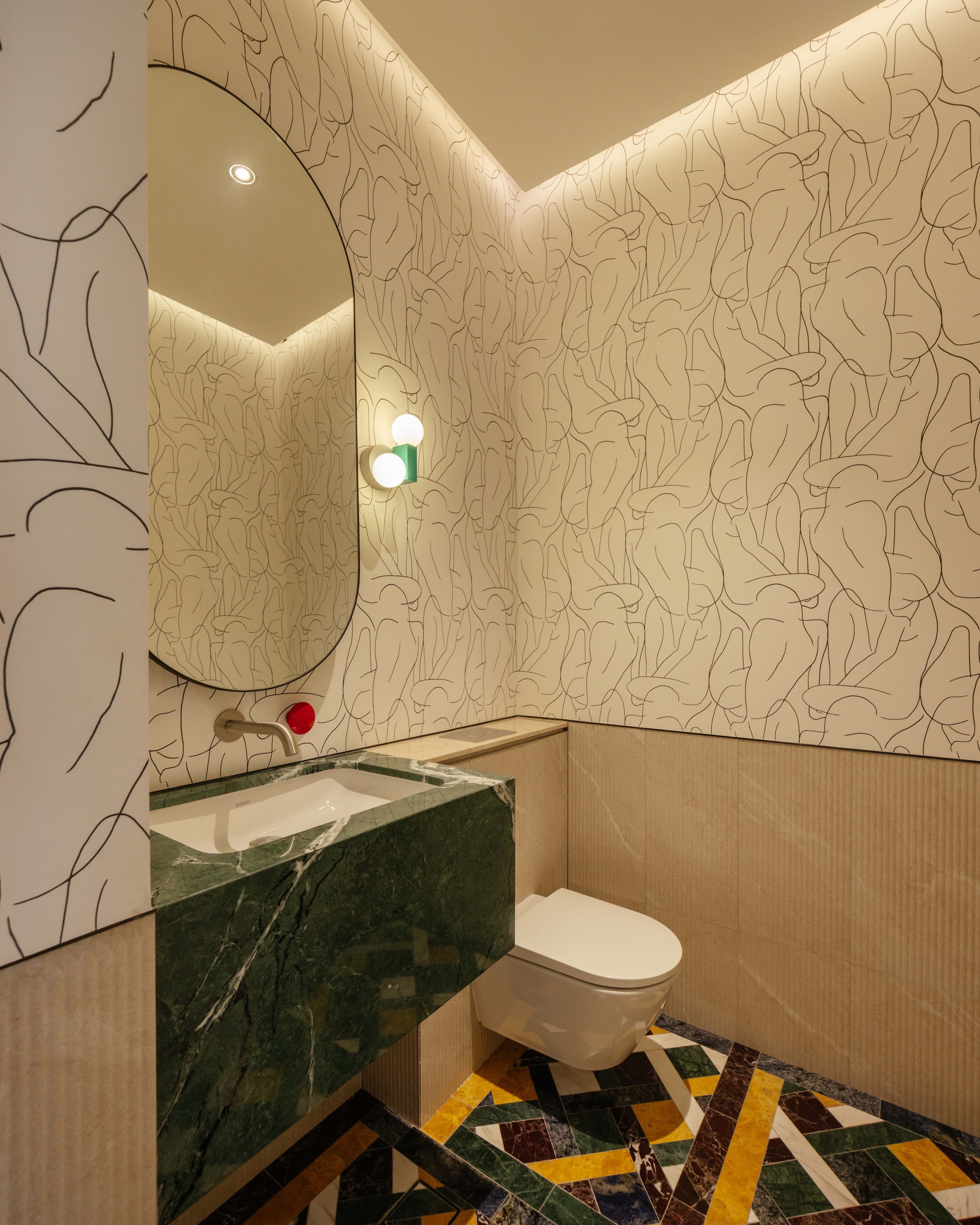
Powder room Even the smallest room is fully resolved. Enclosing wallpaper, a cantilevered marble vanity, and a polychrome stone floor — compression as design intent.
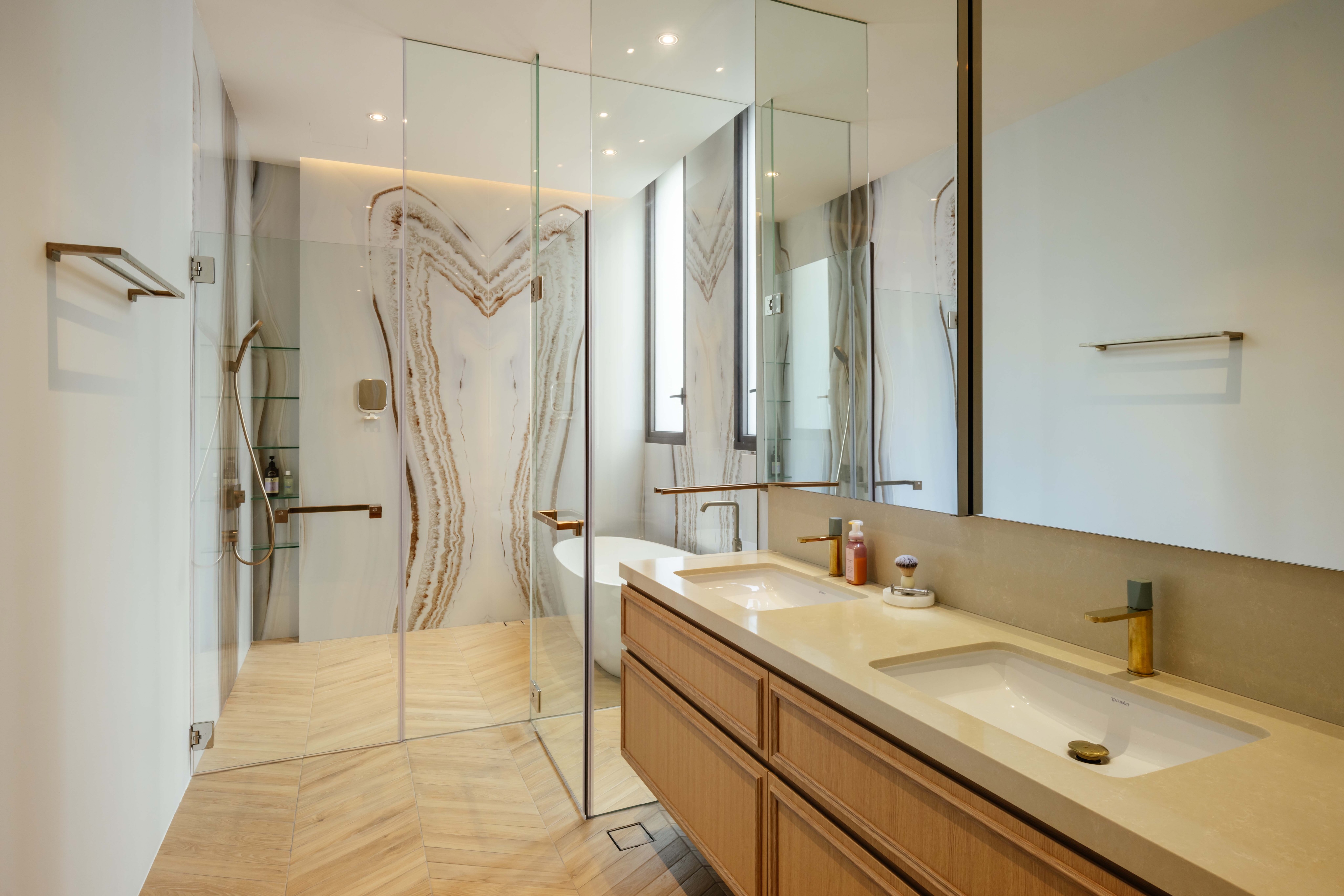
Master bathroom Stone selected for its figuring, not its neutrality. The bookmatched slab becomes the room's anchor; everything else defers.